

Author: Haris Arain, Analyst
Table of Contents
- Introduction
- Prior to Founding Cognition AI
- Version 1.0
- Overview of Devin.ai
- Major Product Releases
- Future Outlook

Introduction
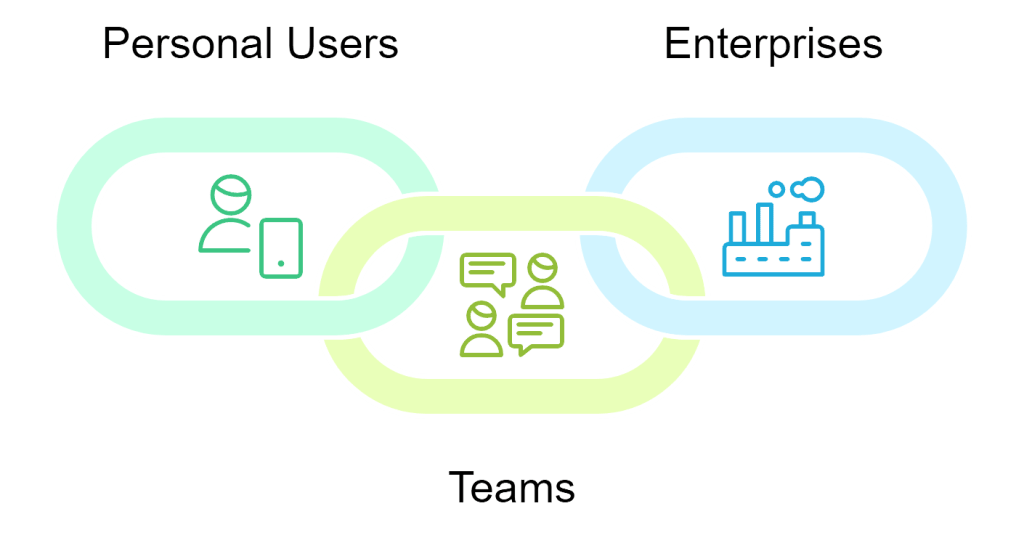
Devin.ai is an autonomous artificial intelligence developed by Cognition AI to perform software engineering tasks, including planning, writing, executing, and debugging code and effectively operating as an AI software engineer. Devin.ai aims to solve various issues faced by software developers by increasing efficiency via the automation of coding tasks and allowing for more scalability by handling entire projects. While serving clients primarily in the US, Devin.ai offers a subscription-based platform with three distinct plans: Personal, Team, and Enterprise.
Prior to Founding Cognition AI
Cognition AI was founded in November 2023 by Scott Wu, Walden Yan, and Steven Hao who all came from a background in informatics and technology. Scott Wu was a graduate of Harvard and co-founded Lunchclub in 2017, serving as its CTO until 2022 while Steven Hao served as a top engineer at Scale AI. All the co-founders were Gold Medalists at the International Olympiad in Informatics (IOI), with Scott winning 3 gold medals in total.
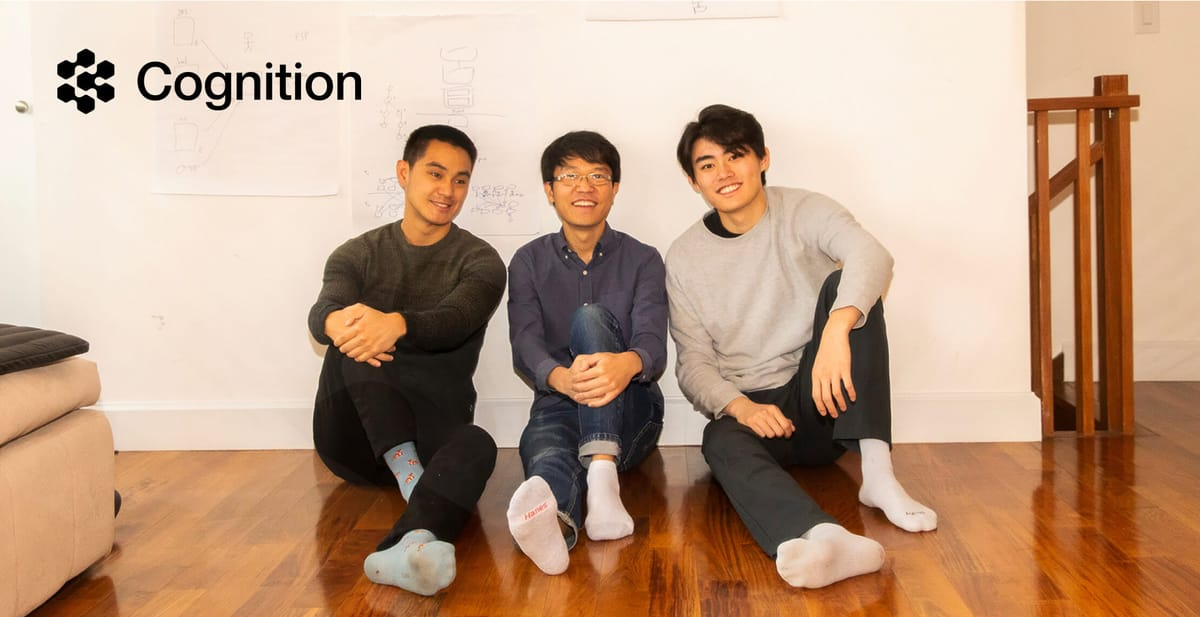
Given their strong background and experience in computer science, the founders observed inefficiencies in traditional software development processes and recognized the potential for AI to autonomously handle coding tasks. The founding team collectively holds 10 IOI gold medals and has experience at leading technology companies, including Google DeepMind, Scale AI, and Lunchclub, allowing them to gain a strong insight into the processes used by big technology companies in software development and particular pain points, such as human error and code inefficiencies. Initially focused on cryptocurrency, Cognition AI pivoted to AI development, aligning with emerging trends in Silicon Valley, especially after the release of ChatGPT and bolstered by the large industry push for more advanced Large Language Models (LLMs).

While other companies offered AI coding assistants that provide code suggestions or snippets, the founders believed these solutions were limited in scope and efficiency.
Cognition AI’s approach was to have a more autonomous platform and develop Devin as an AI software engineer capable of independently planning, writing, debugging, and testing code, allowing Devin to stand out.
Version 1.0
While Devin.ai is still relatively new, earlier versions of the software were centered around being highly adaptable, with Devin being capable of learning new technologies by reviewing relevant materials, enabling it to stay current with emerging tools and frameworks. Additionally, from its early inception, Devin.ai was powered to employ its own shell, code editor, and web browser to execute engineering tasks without human intervention.
In March 2024, Cognition AI released demos showcasing Devin’s capabilities, including building websites and applications autonomously. Early showcases of Devin’s capabilities sparked controversy within the industry as much of the discussion concerned the future of software engineering, with some expressing concerns about potential job displacement due to AI automation, with jobs such as software development and engineering being seen as easily replaceable by Devin. As Cognition continues to regularly add more features to Devin, the company will continue to drive the innovation of AI in the technology space.
Overview of Devin.ai
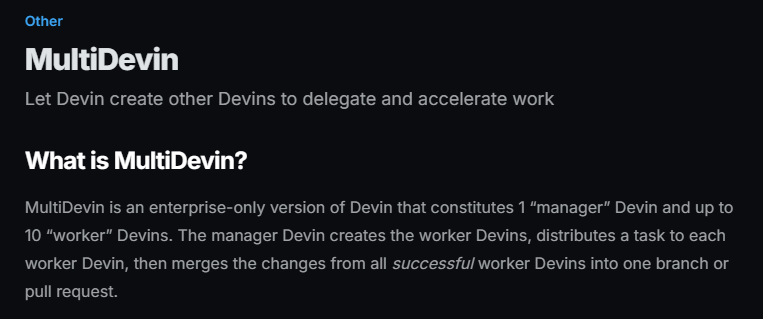
Devin’s current offerings are mostly within the software engineering space, with Devin acting as an autonomous AI able to perform most tasks within its own platform, increasing code efficiency and reducing errors. As mentioned before, Devin’s pricing plan includes: a personal plan, team plan, and enterprise plan. The personal plan provides access to Devin’s core capabilities with a monthly allocation of Agent Compute Units (ACUs) with additional ACUs being able to be purchased as needed. The team plan includes all features of the personal plan but with higher ACU limits and a dedicated team workspace for collaboration, making it ideal for team software development and projects. Lastly, the enterprise plan offers advanced capabilities such as Custom Devins (fine-tuned for specific use cases) and MultiDevin (enabling parallel task processing), along with options for deployment in a virtual private cloud (VPC) and dedicated account support, allowing for wider software development on a commercial scale.
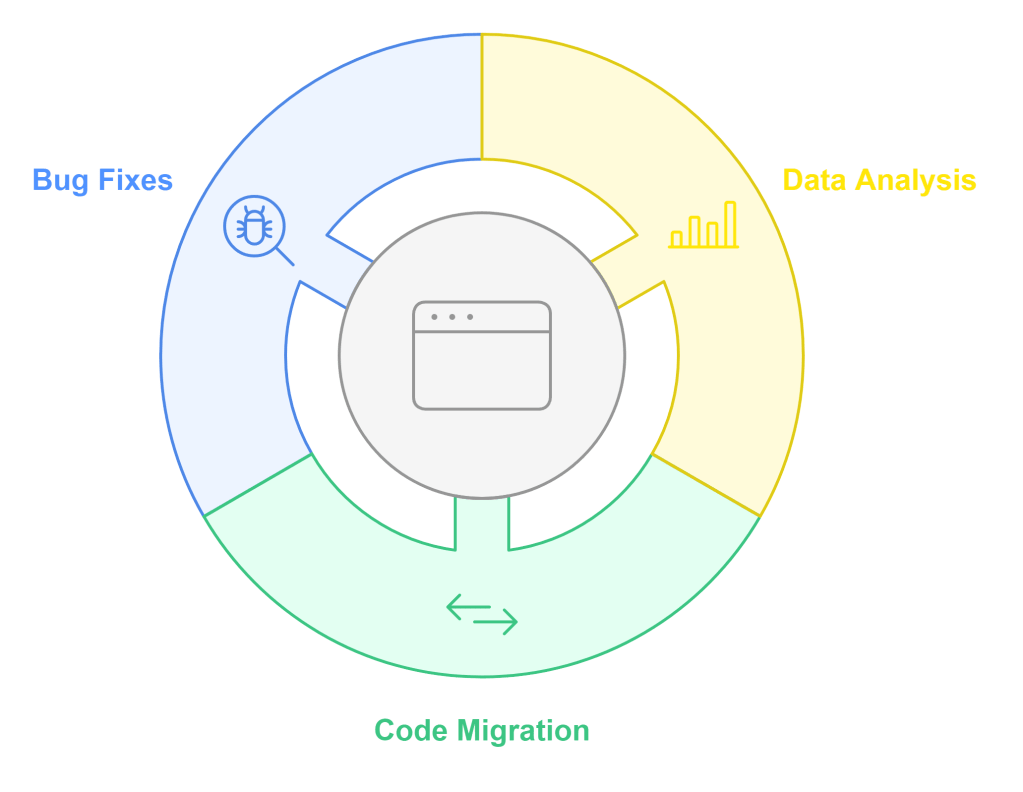
Devin.ai is currently in its early access stage with users being able to create an account and utilize Devin’s features, with a limit of five daily tasks. Devin caters to both B2B and B2C markets, offering plans suitable for all levels from individual developers to enterprises. While Devin’s current customer base is still evolving, the platform has been increasingly used for workflow integration. Most users have reported enhanced productivity as Devin automates routine coding tasks, allowing users to focus on complex problem-solving and creative aspects of software development. Additionally, due to Devin’s adaptive capabilities, many users have reported new work paradigms as the platform autonomously handles tasks such as code migration, bug fixes, and data analysis, enabling new workflows where AI actively contributes to software engineering projects.
While many within the industry see Devin.ai as a step forward for AI and software engineering, there are various concerns about the role and need for software engineers within the technology sector, with many questioning whether there is likely high job displacement as Devin’s capabilities continue to develop. While Devin is still in its early access stage, a few challenges have arisen in regard to the platform’s explainability and performance. As with any platform, there is a core issue of trust and explainability with Devin as developers need to understand Devin’s decision-making processes to build trust and ensure effective human-AI collaboration, similar to LLMs and other AI applications that rely on human interaction and data from the user. Additionally, there has been some performance skepticism regarding Devin’s ability to handle complex tasks that require human creativity and intricate problem-solving as the platform is yet to be utilized for more elaborate projects on a corporate scale.

Cognition AI aimed to create a fully encompassed platform that allowed for efficient development and debugging through the release of Devin. Devin’s main competitors include GitHub Copilot, Tabnine, and Codeium, with each platform offering its unique value proposition, with Copilot being the largest and main competitor to Devin. However, unlike competitors that primarily assist with code suggestions like Copilot and Codeium, Devin aims to function as a fully autonomous software engineer, capable of independently planning, coding, debugging, and testing, essentially reducing the need for human development early own, and allowing the AI to efficiently reduce much of the initial code implementation, hence the differentiating factor for Devin.ai against its competitors.
Major Product Releases
Devin has seen two versions since it first released, with version 1.0 being released in March 2024, and version 2.0 being released in July 2024. Version 1.0 was the primary and first look at Devin’s capabilities as an autonomous AI software developer; the platform’s key features were to plan, write, debug, and test code, utilize its own platform (shell, code editor, etc.) to execute tasks, and perform new tasks such as code migrations, data analysis, and bug fixes. Overall, version 1.0 was a success in putting Devin.ai in the spotlight for AI code development, achieving a 13.86% success rate in resolving real-world GitHub issues unassisted, surpassing previous models and competitors. Version 2.0 was soon released, enhancing Devin even more, and introducing MultiDevin capability, which allowed multiple AI agents to work in parallel on complex tasks. MultiDevin enabled Devin to create and manage other Devins, allowing for parallel processing, improved performance in engineering tasks, and a more collaborative AI agent operation. Additionally, version 2.0 also had expanded integration with tools like Notion and Jira, and even more enhanced learning algorithms for better adaptation to new technologies and coding practices. Overall, both versions have been impactful in building the basis for the Devin ecosystem and further advancing the platform’s abilities.
The core user base of software engineers and development teams remained consistent across versions, with there being a slight increase in adoption once version 2.0 was released. Version 2.0’s MultiDevin feature attracted larger enterprises with complex, large-scale projects requiring parallel task execution, allowing for more efficient software development on a larger scale. As Devin.ai is still in its early stages, the main motivations for the new features and releases have been centered around addressing user feedback and requesting more efficient handling of large and complex projects. Additionally, each new version release aims to enhance Devin’s autonomy and collaborative capabilities to increase productivity, particularly amongst teams. Nevertheless, version 2.0’s new MultiDevin feature has continued the fierce debate over job displacement in the software engineering market, as many see Devin’s capabilities nullifying the need for software teams.
Future Outlook
While the AI-driven software development industry is still novel and developing rapidly, the future of Devin.ai in being the industry lead is being cemented. Cognition AI plans to enhance Devin’s capabilities, focusing on improving its autonomy in software engineering tasks, expanding its integration with various development tools, and refining its ability to learn new technologies. While the company has not explicitly mentioned new version releases or updates, it is reasonable to expect that new versions are in development. Additionally, the company aims to broaden its user base by targeting both individual developers and large enterprises, offering tailored solutions to meet diverse software development needs, allowing for both B2B and B2C operations while trying to make it easier for newer users with little coding background to use the platform. Scott Wu has emphasized the transformative potential of AI in software development, stating, “AI agents are just getting started. Two years ago it was unthinkable that an AI could write code, run commands, and browse the web. We’re excited for what the next two years will bring”, with management having a clear vision of the scalability and development of Devin long-term.

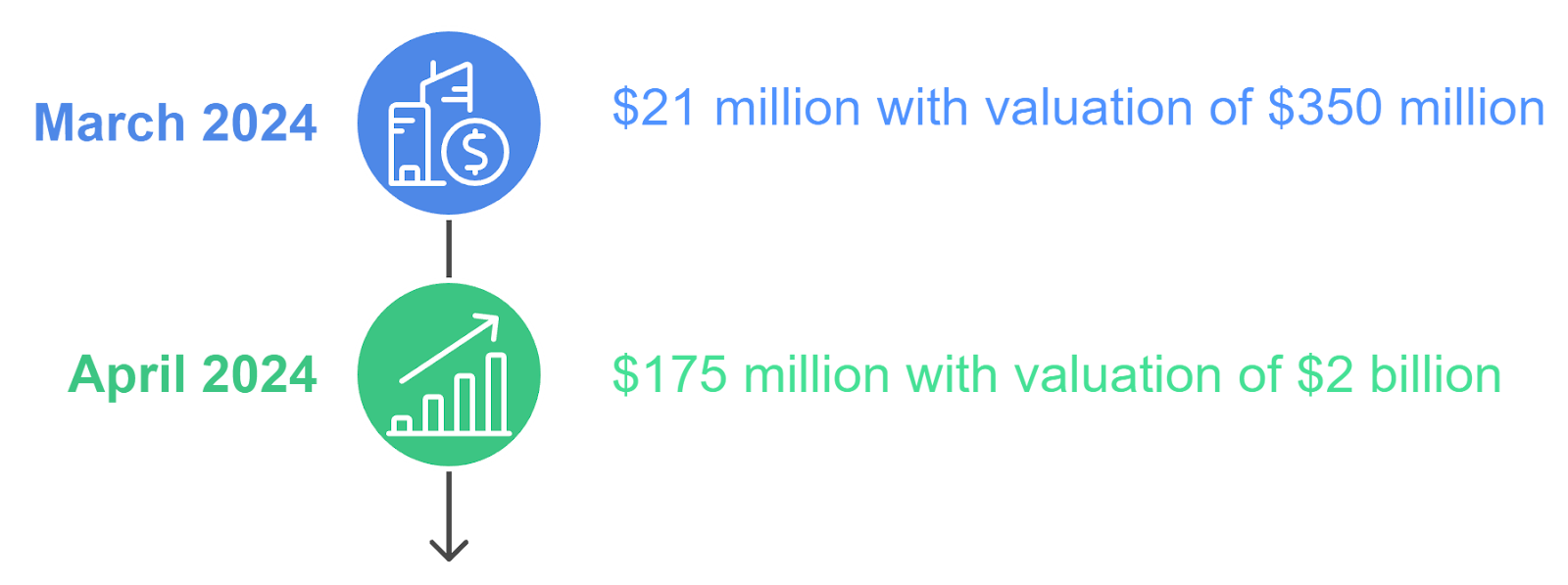
Devin’s autonomous coding capabilities position it to significantly impact the software development industry, potentially streamlining workflows and reducing development time across various sectors. Companies like GitHub Copilot and OpenAI’s Codex offer AI-assisted coding tools, indicating a growing market for AI-driven development solutions. However, Devin’s fully autonomous approach sets it apart, suggesting a unique market position and more scalable product overall. On April 25, 2024, Devin reached a total of $209 million in funding and a post-money valuation of $2 billion. This figure includes two Series A rounds—$21 million and $10 million—secured in March 2024, followed by a $175 million Series B in April. The swift jump from a $350 million valuation to $2 billion in just over a month underscores investors’ strong confidence in AI-driven coding assistants and Cognition AI’s
technology.
While the market and competitive landscape is still steadily developing, the market density may be small, but highly competitive and saturated. The AI-driven coding assistant market includes big players like GitHub Copilot, OpenAI’s Codex, and emerging tools such as Cosine’s Genie. These various competitors offer unique and slightly different products as a whole but still do pose a threat to Cognition’s Devin.ai. However, unlike competitors that provide AI-assisted coding, Devin aims to function as a fully autonomous software engineer, capable of independently conducting software development and engineering, setting it apart in the industry. Furthermore, Cognition’s flagship product has redefined both the AI market and the software industry, calling for a controversial new perspective on the industry’s development. Nevertheless, as Devin’s user base and ecosystem grow, the platform will continue to lay the groundwork for a new niche within the AI industry.
Sources: Company websites and press releases
 Stepmark Partners
Comments
One response to “Company Spotlight: Cognition AI – Devin, your Autonomous Software Engineer”
[…] detailed case study published by StepMark.ai highlights how Devin AI has been integrated into enterprise-level development […]