

The AI Company Spotlight Series is a 5 week special covering one innovative AI company a week.
Author: Katherine Lee, Analyst

Table of Contents
- Introduction
- Background
- Inspirations for Harvey
- Version 1.0
- Harvey Today
- Product Releases Since Launch
- Future Outlook
Introduction
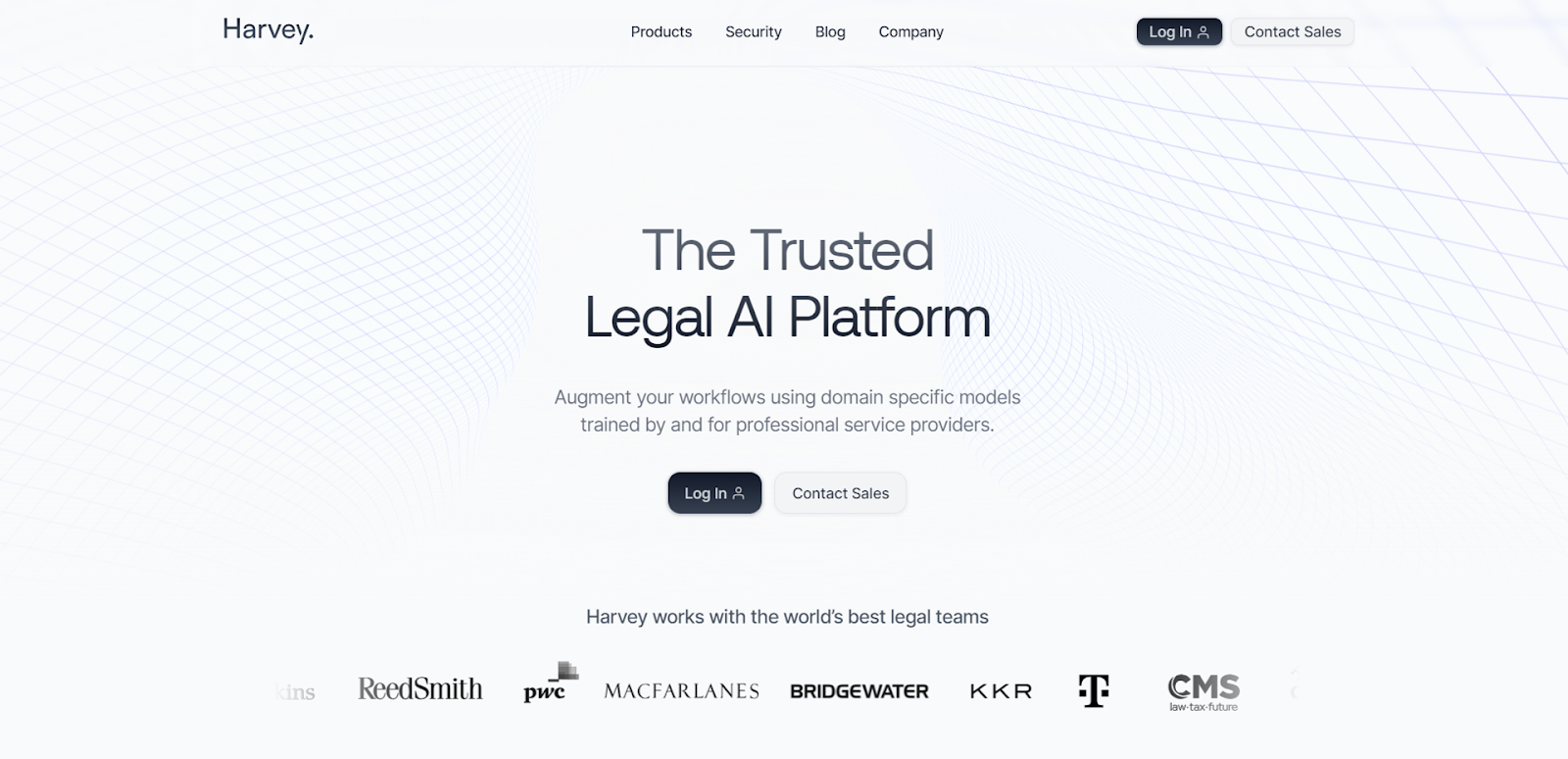
Harvey AI is a San Francisco-based company that focuses on generative AI solutions for the legal industry. Their platform assists legal professionals with tasks such as contract analysis, due diligence, and regulatory compliance, to enhance efficiency and accuracy in legal workflows. Mainly based in the United States and Europe, Harvey AI collaborates with leading law firms and professional service providers to integrate their advanced AI into day-to-day operations.
Source: Harvey.ai
Background
Before co-founding Harvey, Winston Weinberg was a securities and antitrust litigator at O’Melveny & Myers. Weinberg earned a Bachelor of Arts from Kenyon College (2013–2017) and a Juris Doctor from the University of Southern California Gould School of Law in 2021. He began his legal career in 2020.
Gabriel Pereyra was a research scientist at DeepMind, Google Brain, and Meta AI. Pereyra earned his Bachelor’s degree in Computer Science from the University of Southern California (2012–2016). He was a Brain Resident at Google in 2016 and a Research Scientist at DeepMind in 2017. In 2018, he founded a stealth startup and later joined the founding team of XOKind in 2020. In 2022, he worked as a Machine Learning Engineer at Meta.
The combined backgrounds of Weinberg and Pereyra in law and artificial intelligence enabled them to create Harvey AI–optimizing legal workflows.

Source: Bloomberg
Inspirations for Harvey
Weinberg credits the birth of Harvey to his experience as an associate at his prior law firm. Facing repetitive tasks like document review and contract analysis, both of which are time-consuming and prone to human error, he was inspired by the prominence of legal workflow inefficiencies that he had once faced, like many others in the field. Combined with Pereyra’s background in AI research, the problem highlighted the need for AI’s capabilities in automating complex processes.
While existing legal tech solutions addressed specific tasks, the founders identified an uncovered gap in comprehensive AI-driven platforms meant for the legal industry. This motivated them to create Harvey AI, which provides a more integrated and effective solution.
Other competitors of AI-driven legal solutions include companies like Casetext, Klarity, and Robin AI. However, Harvey AI differentiates itself by focusing on creating custom Legal Language Models, allowing them to case against complex legal challenges across various practice areas and jurisdictions.
Version 1.0
As an LLM model, Harvey, in its earliest models, helped lawyers as a “natural language interface for their existing legal workflows” (Pereyra), aiming to help with menial tasks such as performing preliminary legal research, editing documents, and analyzing contracts. However, from its initial launch, Pereyra emphasized how Harvey is “to serve as an intermediary between tech and lawyer,” rather than an automation bot to replace lawyers out of the workforce. Harvey became a tool, rather than a crutch, as lawyers could use the time saved by Harvey to dedicate to higher-value tasks instead.
Harvey Today
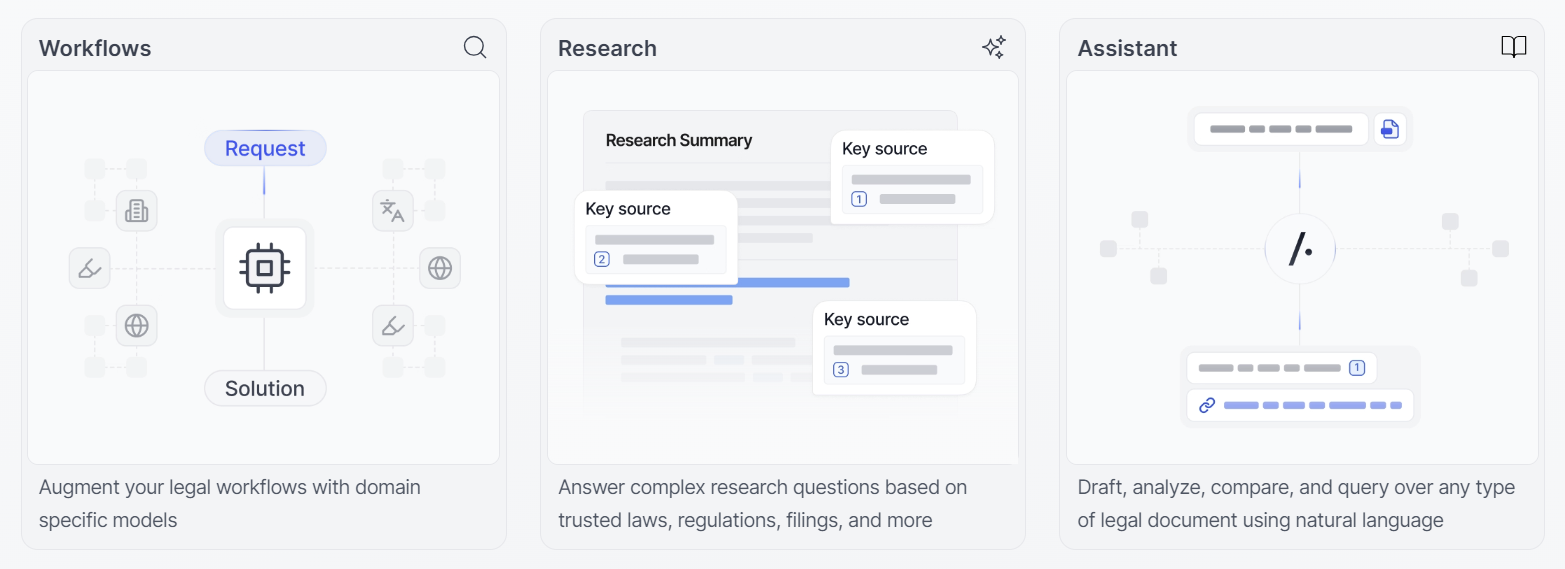
Harvey AI’s platform helps legal professionals with the main use cases: contract analysis, due diligence, litigation support, and regulatory compliance.
Source: LinkedIn
Harvey AI operates in the B2B sector, serving law firms, professional service providers, and enterprises across various practice areas and jurisdictions. Their clients includes leading household-named firms, such as Bridgewater, KKR, Reed Smith, T-mobile and PwC.
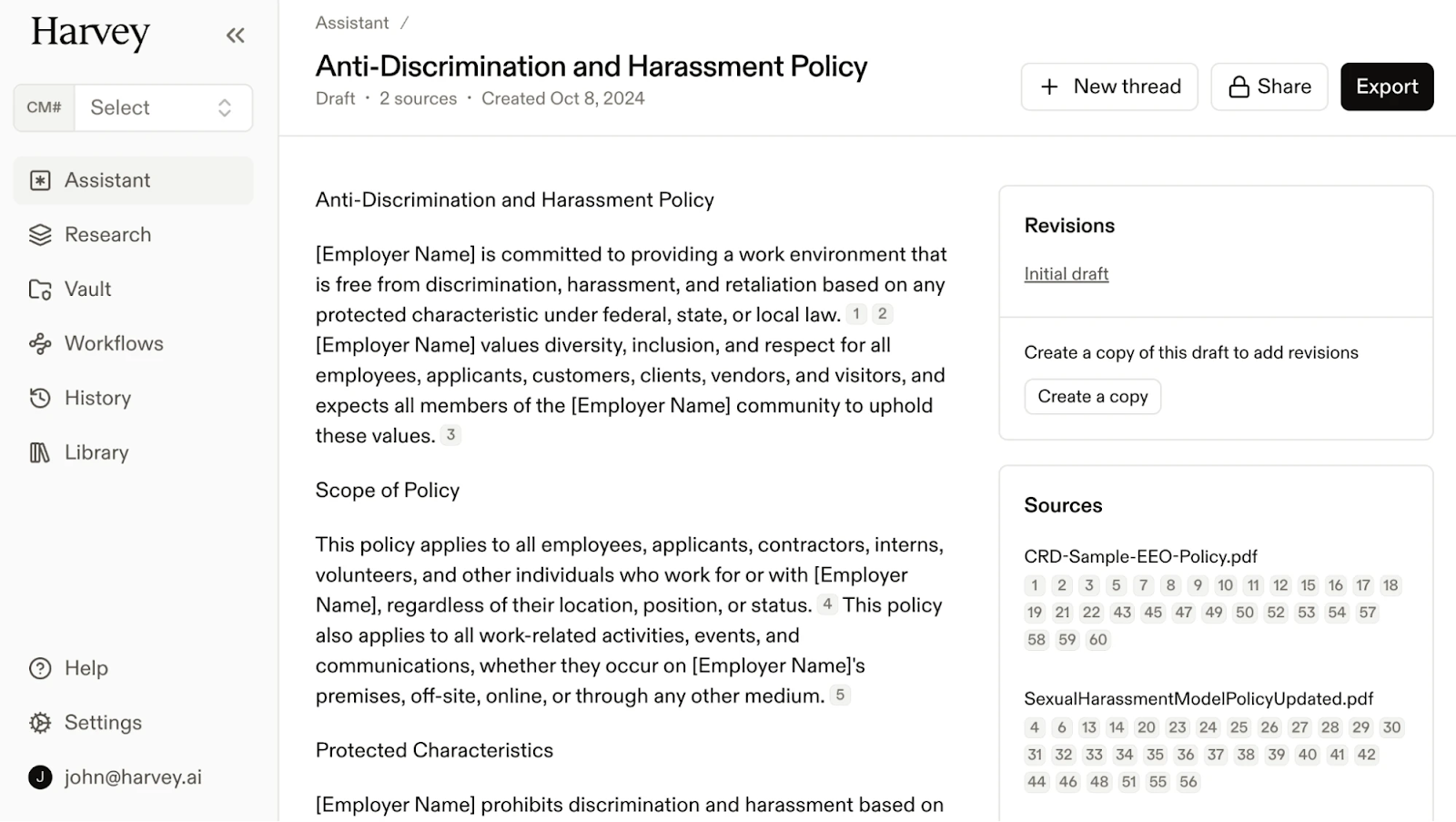
Clients use Harvey AI to streamline existing workflows, optimizing tasks like drafting, due diligence, case management, and regulatory advising. The platform also enables new approaches to legal work by providing rapid and precise research and insights.
Source: Harvey.ai
Harvey AI’s LLMs are trained on complex legal tasks and fine-tuned by domain experts. They have partnered with OpenAI to develop custom-trained case law models, incorporating extensive legal data, including all U.S. case law.
The company faces potential challenges such as ensuring data security, maintaining the reliability of AI-generated outputs, and navigating the competitive landscape of legal AI solutions.
Harvey AI operates in a competitive market with companies like Casetext, Klarity, and Robin AI offering similar AI-driven legal solutions. Each competitor brings unique approaches to integrating AI into legal workflows.
Product Releases Since Launch
Version 1.0: The initial release focused on automating tasks such as contract analysis, due diligence, litigation support, and regulatory compliance, providing legal professionals with tools to streamline these processes.
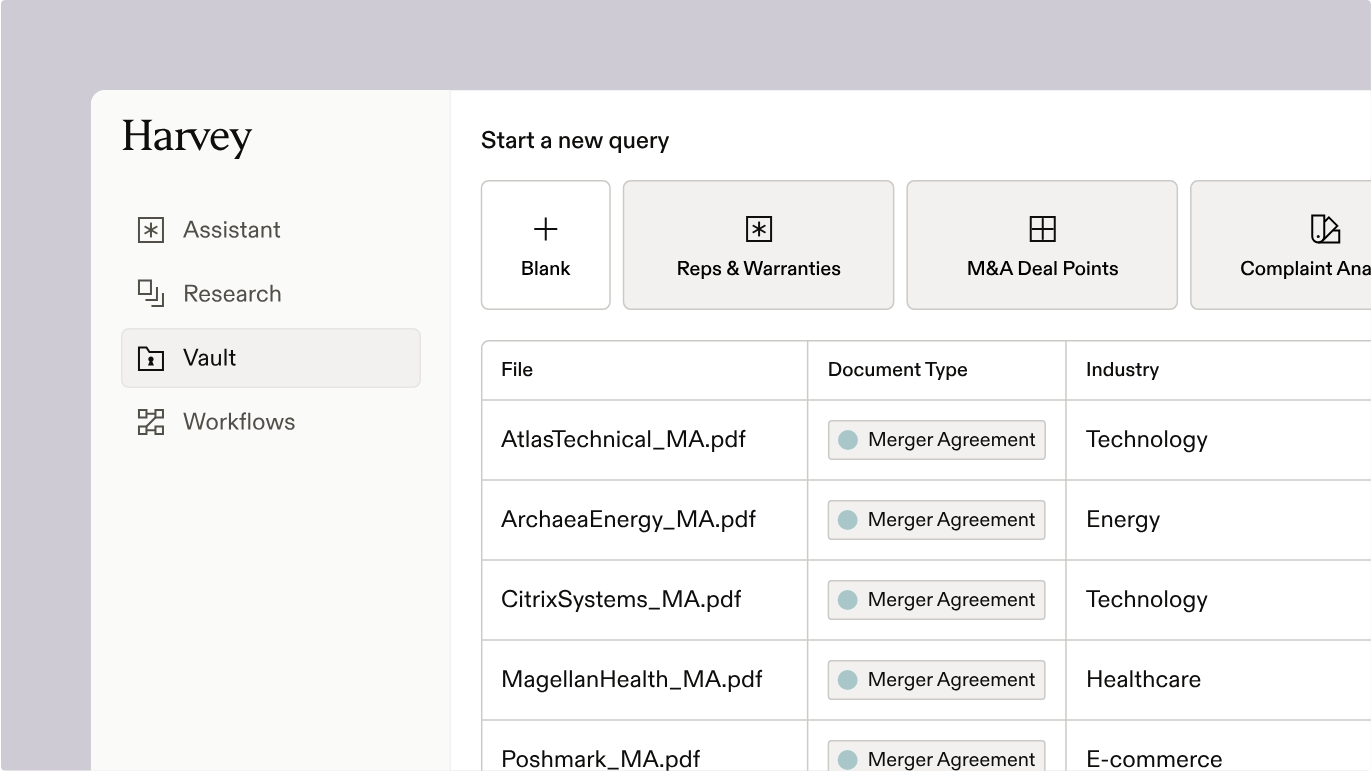
Later updates introduced features like the “Vault” product, enabling users to apply generative AI capabilities to extensive document collections, thereby enhancing document management and analysis.
Source: Harvey.ai
Initially targeting large law firms, Harvey AI expanded its user base to include professional service providers and enterprises, reflecting a broader application of its AI solutions across various sectors. Since then, Harvey AI has maintained a B2B focus.
The introduction of features like the Vault aimed to provide secure workspaces for analyzing large document collections, and addressing client needs for efficient document management. There have been no significant controversies reported regarding these feature releases yet.
In August 2024, Harvey AI introduced BigLaw Bench, a public dataset for assessing large language models (LLMs) on complex legal tasks, expanding on prior research into LLM legal reasoning. While Harvey’s proprietary models outperform publicly available LLMs, all models demonstrate room for growth compared to lawyer performance.

Source: LegalTechnology
Harvey AI has partnered with other AI startups to advance their products. In May of 2024, Harvey AI announced a partnership with Mistral AI through their open-source platform with goal of achieving transparency toward clients’ most “sensitive matters.” In July of 2024, Harvey AI collaborated with Voyage AI, a developer for custom embedding models, to embed more than 20 billion tokens of legal text into their LLM.
Future Outlook
The company plans to double its workforce by the end of 2024, focusing on hiring professionals with both legal expertise and AI proficiency to advance its technology and expand its service offerings.
Co-founders Winston Weinberg and Gabriel Pereyra have expressed gratitude for the support from investors and clients, emphasizing their commitment to scaling and improving Harvey’s AI-powered technology across various business functions and geographies.
With substantial investments and a valuation of $1.5 billion, Harvey AI is positioned to significantly impact the legal industry against competitors Casetext, Klarity, and Robin AI.
Harvey AI has raised a total of $206 million over four funding rounds:

Investors have expressed strong confidence in Harvey AI’s potential to transform the legal industry. For instance, Sequoia Capital led the Series A funding round, indicating their belief in the company’s vision and growth prospects.
The legal AI market is competitive, with multiple companies offering similar solutions but Harvey AI seems to be able to differentiate themselves, becoming one of today’s leading AI tools in the legal industry.
Sources: 1 The Org 2 The Org 3 Financial Times 4 TechCrunch 5 Clio 6 Harvey AI 7 OpenAI 8 Large Language Law 9 Law Next 10 Large Language Law 11 Harvey AI 12 Harvey AI 13 Harvey AI 14 The Legal Wire 15 Harvey AI 16 Owler 17 Pitchbook 18 Harvey AI 19 Legal IT Professionals 20 Harvey AI
 Stepmark Partners